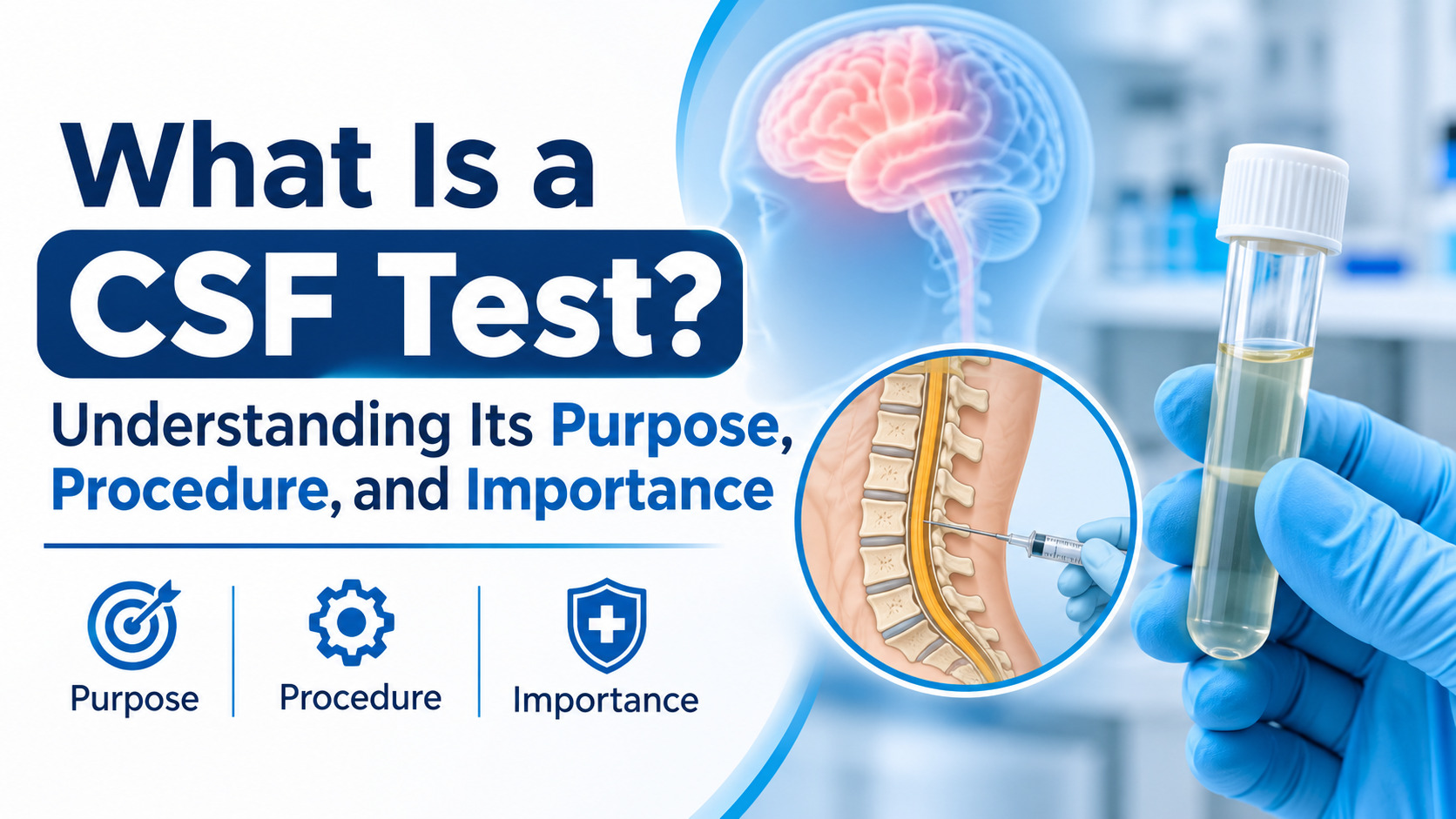
What Is a CSF Test? Understanding Its Purpose, Procedure, and Importance
The human brain and spinal cord are protected by a clear, colourless fluid called cerebrospinal fluid (CSF). This fluid cushions the central nervous system, helps maintain a stable environment around the brain, and supports the removal of metabolic waste. Examining this fluid can provide important information about infections, inflammation, bleeding, and certain neurological conditions. This diagnostic investigation is known as a CSF Analysis or Cerebrospinal Fluid Analysis.
Doctors may recommend a CSF test when a patient experiences symptoms such as persistent headaches, fever, neck stiffness, seizures, altered consciousness, or unexplained neurological changes. The test helps healthcare professionals investigate possible conditions affecting the brain and spinal cord.
Understanding the CSF Test Purpose, procedure, preparation, and results can help patients feel more informed before undergoing this investigation. This guide explains how the test works, why it is recommended, and what patients should know about its clinical importance and cost in India.
What Is a CSF Test?
A CSF test is a diagnostic laboratory investigation that examines cerebrospinal fluid collected from the lower back through a procedure called a lumbar puncture. The fluid is analysed for different parameters, including white blood cells, red blood cells, protein, glucose, and microorganisms.
Cerebrospinal Fluid Analysis helps doctors identify abnormalities that may indicate infections, inflammation, bleeding, or other disorders involving the central nervous system.
Unlike routine blood investigations, a Spinal Fluid Test provides information about the fluid surrounding the brain and spinal cord. Its findings can help doctors make more informed diagnostic and treatment decisions.
What Is the Purpose of a CSF Test?
The primary CSF Test Purpose is to investigate medical conditions affecting the brain, spinal cord, and surrounding tissues. Since cerebrospinal fluid interacts closely with the central nervous system, changes in its composition can provide valuable diagnostic clues.
Doctors may recommend CSF Analysis for several reasons.
1. Detecting Meningitis
Meningitis is inflammation of the protective membranes surrounding the brain and spinal cord. It may result from bacterial, viral, fungal, or other infections. CSF examination can help identify the likely cause and guide further testing and treatment.
2. Investigating Encephalitis
Encephalitis refers to inflammation of brain tissue, commonly associated with viral infections. CSF testing can help detect signs of infection and inflammation, although additional investigations may be necessary.
3. Identifying Neurological Disorders
CSF examination may support the evaluation of certain neurological conditions, including multiple sclerosis and other inflammatory or autoimmune disorders. Specific tests, such as oligoclonal band analysis, may be requested when clinically indicated.
4. Investigating Bleeding Around the Brain
When doctors suspect subarachnoid haemorrhage, CSF examination may sometimes be considered if initial imaging does not establish the diagnosis and clinical suspicion remains.
5. Evaluating Other Central Nervous System Conditions
Depending on the symptoms, doctors may request specialised CSF investigations to evaluate certain cancers, inflammatory conditions, or infections such as tuberculosis affecting the central nervous system.
When Do Doctors Recommend a CSF Analysis?
A doctor may recommend a CSF test when symptoms suggest a possible problem involving the central nervous system.
Common symptoms and clinical situations include:
- Persistent or severe headaches with concerning neurological symptoms.
- Fever accompanied by neck stiffness or sensitivity to light.
- Unexplained seizures or changes in consciousness.
- Confusion, unusual behaviour, or altered mental status.
- Suspected meningitis or encephalitis.
- Unexplained neurological weakness or sensory changes.
- Clinical suspicion of inflammatory neurological disorders.
Not everyone experiencing headaches or fever requires a CSF test. The decision depends on medical history, physical examination, symptoms, and other investigation findings. In suspected meningitis, urgent medical assessment is essential, and treatment should not be delayed when clinically indicated.
How Is a CSF Test Performed?
The CSF Test Procedure generally involves collecting a small sample of cerebrospinal fluid through a lumbar puncture, also called a spinal tap. It is usually performed in a hospital or an appropriately equipped medical facility by a trained healthcare professional.
Steps involved in the procedure:
- Patient positioning: The patient is asked to lie on their side with knees bent towards the chest or sit while leaning forward.
- Cleaning and preparation: The lower back is cleaned using an antiseptic solution to minimise infection risk.
- Local anaesthesia: A local anaesthetic is administered to numb the area.
- Fluid collection: A thin, specialised needle is carefully inserted between two lower-back vertebrae to access the space containing cerebrospinal fluid.
- Sample collection: A small amount of CSF is collected in sterile containers for laboratory testing.
- Needle removal: The needle is removed, and a dressing is applied to the puncture site.
The collected sample is sent for a CSF Laboratory Examination, where different tests are performed according to the doctor's requirements. The procedure usually takes around 15–30 minutes, although the duration may vary.
What Is Included in a CSF Laboratory Examination?
A CSF Laboratory Examination may involve several tests depending on the suspected medical condition. Common parameters include:
- CSF Cell Count: Measures white and red blood cells to identify possible infection, inflammation, or bleeding.
- CSF Protein: Measures protein levels, which may increase in certain infections and neurological disorders.
- CSF Glucose: Evaluates glucose levels, which can change in some bacterial and fungal infections.
- CSF Culture: Helps identify bacterial or fungal organisms in the sample.
- CSF Microscopy: Examines cells and microorganisms under a microscope.
- Specialised Tests: May include PCR, antibody testing, oligoclonal bands, or cytology when medically indicated.
These parameters help doctors assess the composition of cerebrospinal fluid and investigate possible abnormalities. Not every patient requires all these tests.
MedlinePlus+2
How to Prepare for a CSF Test?
Proper CSF Test Preparation helps ensure that the medical team can perform the procedure safely and interpret the findings accurately.
Patients should follow their doctor's instructions and consider the following precautions:
- Inform the doctor about all medicines, including blood thinners and aspirin.
- Share details of existing medical conditions, allergies, and previous spinal procedures.
- Discuss any history of bleeding disorders or low platelet counts.
- Follow instructions regarding food, water, and medication before the procedure.
- Ask whether any additional examination or imaging is required before the lumbar puncture.
Fasting is not routinely required for every CSF test. Preparation depends on the patient's condition and the medical team's instructions.
MedlinePlus+1
What Do CSF Test Results Indicate?
CSF Test Results provide information about the condition of the central nervous system. Doctors interpret the findings by considering the patient's symptoms, medical history, examination, and other diagnostic investigations.
Some common findings include:
- Increased white blood cells may indicate infection or inflammation.
- Elevated protein levels may be associated with infections or neurological disorders.
- Reduced glucose levels may occur in certain bacterial or fungal infections.
- The presence of microorganisms may suggest an infectious condition.
- Red blood cells may indicate bleeding or contamination during sample collection.
Normal and abnormal reference values can vary depending on the laboratory and the specific investigation. Therefore, an abnormal result does not automatically confirm a particular disease. Medical interpretation and, sometimes, additional tests are necessary.
What Is the CSF Test Cost in India?
The CSF Test Cost in India depends on the type and number of investigations requested, the diagnostic facility, sample processing requirements, and the patient's location.
A basic CSF examination may involve fewer parameters, while specialised investigations such as PCR, cultures, or autoimmune testing may increase the overall cost.
Before undergoing the investigation, patients can ask the diagnostic facility about the individual test charges, sample collection arrangements, and expected report availability.
Is a Lumbar Puncture Test Safe?
A Lumbar Puncture Test is generally considered a safe medical procedure when performed by trained professionals after appropriate patient assessment. However, like other medical procedures, it may involve certain risks.
Possible side effects include:
- Temporary headache after the procedure.
- Mild pain or tenderness in the lower back.
- Minor bleeding at the puncture site.
- Rarely, infection or other complications.
Patients should contact their healthcare provider if they experience a severe or persistent headache, fever, increasing back pain, or other concerning symptoms after the procedure.
MedlinePlus+1
Why Is CSF Analysis Important?
CSF Analysis plays an important role in diagnosing conditions that affect the brain and spinal cord. It provides doctors with valuable information that may not be available through routine blood tests or physical examinations alone.
Its importance includes:
- Supporting early investigation of central nervous system infections.
- Helping identify inflammatory and autoimmune neurological conditions.
- Providing information about possible bleeding around the brain.
- Supporting treatment decisions through organism identification and specialised testing.
- Helping doctors monitor selected neurological conditions when repeat testing is clinically appropriate.
Early diagnosis and timely medical evaluation can be particularly important in serious neurological infections.
Conclusion
A CSF test is an important diagnostic investigation that helps doctors evaluate conditions affecting the central nervous system. Through Cerebrospinal Fluid Analysis, healthcare professionals can investigate infections, inflammation, bleeding, and selected neurological disorders.
Understanding the CSF Test Purpose, procedure, preparation, and results helps patients make informed decisions about their diagnostic care. If a doctor recommends a Spinal Fluid Test, patients should discuss its benefits, possible risks, and preparation requirements with their healthcare professional.
Medical disclaimer: This article is intended for educational purposes and does not replace professional medical advice, diagnosis, or treatment. CSF testing should only be undertaken when recommended by a qualified healthcare professional